Grace transforms a life
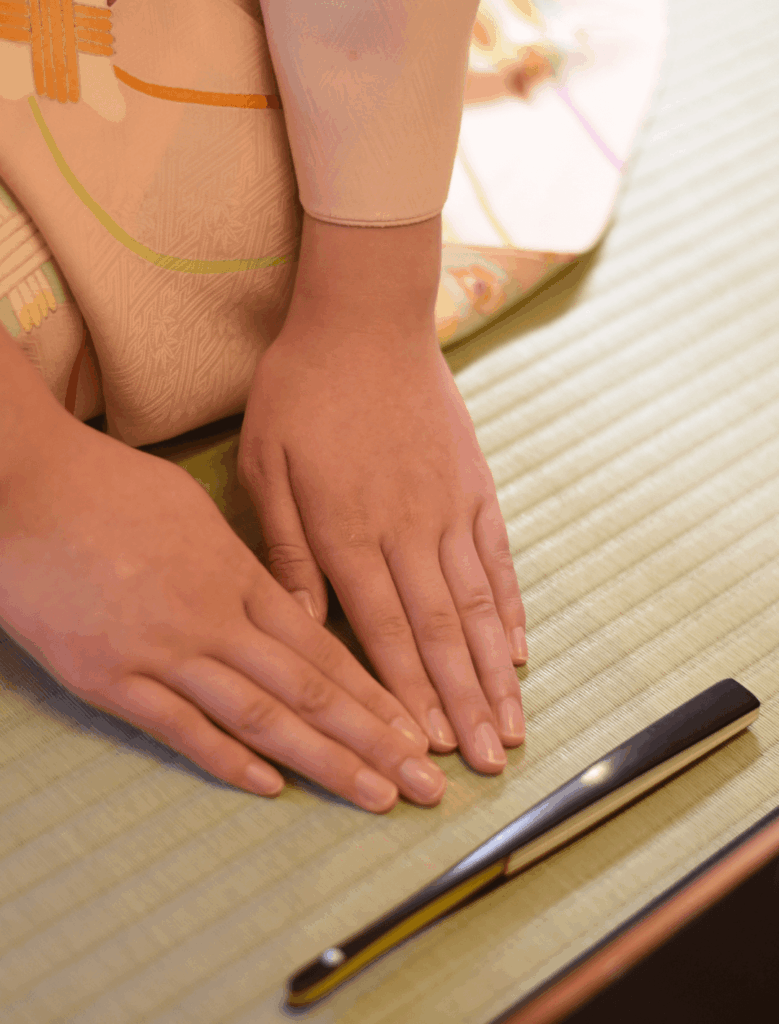
The postures, gestures and movements that comprise true
Japanese etiquette and hospitality are not mere formalities.
Developed over centuries, they are the embodiment of the wisdom,
percipience and perspicacity that enables people to engage with one another in mutual respect,
and are the foundation that has long supported the traditional Japanese arts,
and in particular the three classical Japanese arts of refinement and sophistication:
Sadō (tea ceremony), Kadō (flower arrangement), and Kōdō (incense appreciation).
Etiquette is not simply something to observe, but something to embody,
to incorporate and integrate into oneself.
Through this course, you will learn how proper etiquette can foster trust,
discover the power of presenting yourself to produce an effect, excite notice and make an impression,
and witness how your actions and the way you connect with others begin to change.
attract and impress others, and build genuine trust.
Etiquette and hospitality hold the power

Grace transforms a life
Hospitality and manners are a force that attracts people and creates trust.
The postures, gestures and movements that comprise true
Japanese etiquette and hospitality are not mere formalities.
Developed over centuries, they are the embodiment of the wisdom,
percipience and perspicacity that enables people to engage with one another in mutual respect,
and are the foundation that has long supported the traditional Japanese arts,
and in particular the three classical Japanese arts of refinement and sophistication:
Sadō (tea ceremony), Kadō (flower arrangement), and Kōdō (incense appreciation).
Etiquette is not simply something to observe, but something to embody,
to incorporate and integrate into oneself.
Through this course, you will learn how proper etiquette can foster trust,
discover the power of presenting yourself to produce an effect, excite notice and make an impression,
and witness how your actions and the way you connect with others begin to change.
Elevating One’s Dignity
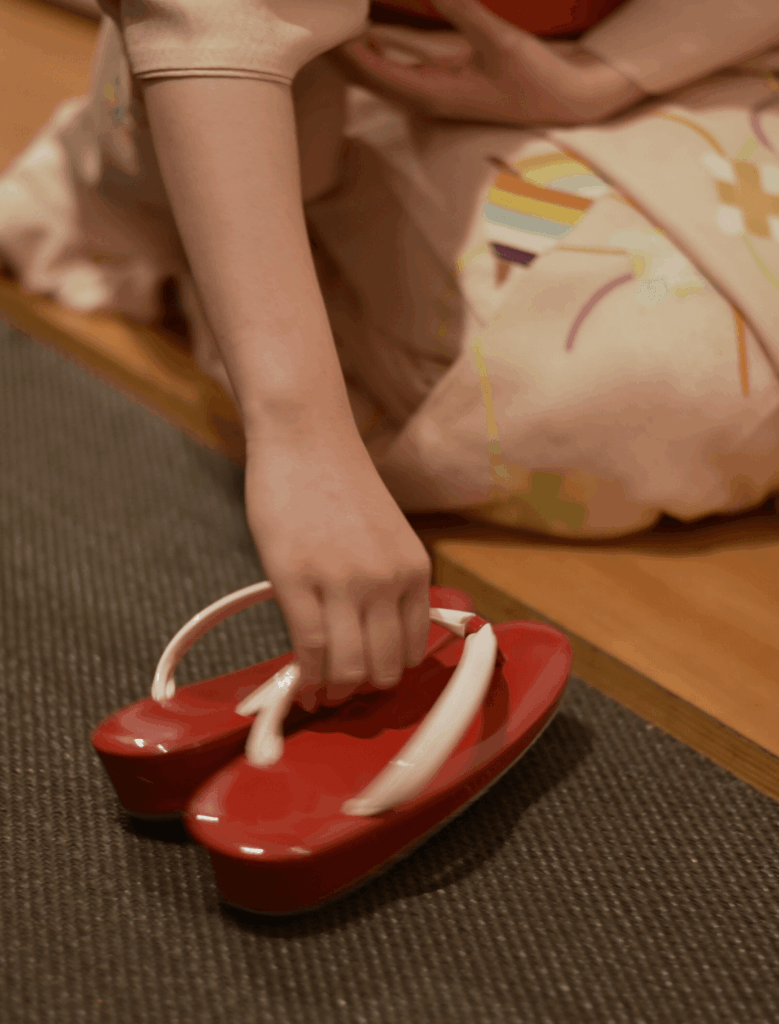
People perceive a person’s self-posession and self-esteem through their words, posture, and the grace of their movements. Hospitality and etiquette are not mere formalities – they are expressions of character, a presence that inspires confidence and respect.
We provide a place where executives, proprietresses, and business leaders can cultivate not only outward manners, but the deeper inner poise and the refined elegance that truly resonates with people.

Elevating One’s Dignity
People perceive a person’s self-posession and self-esteem through their words, posture, and the grace of their movements. Hospitality and etiquette are not mere formalities – they are expressions of character, a presence that inspires confidence and respect.
We provide a place where executives, proprietresses, and business leaders can cultivate not only outward manners, but the deeper inner poise and the refined elegance that truly resonates with people.
Instructor
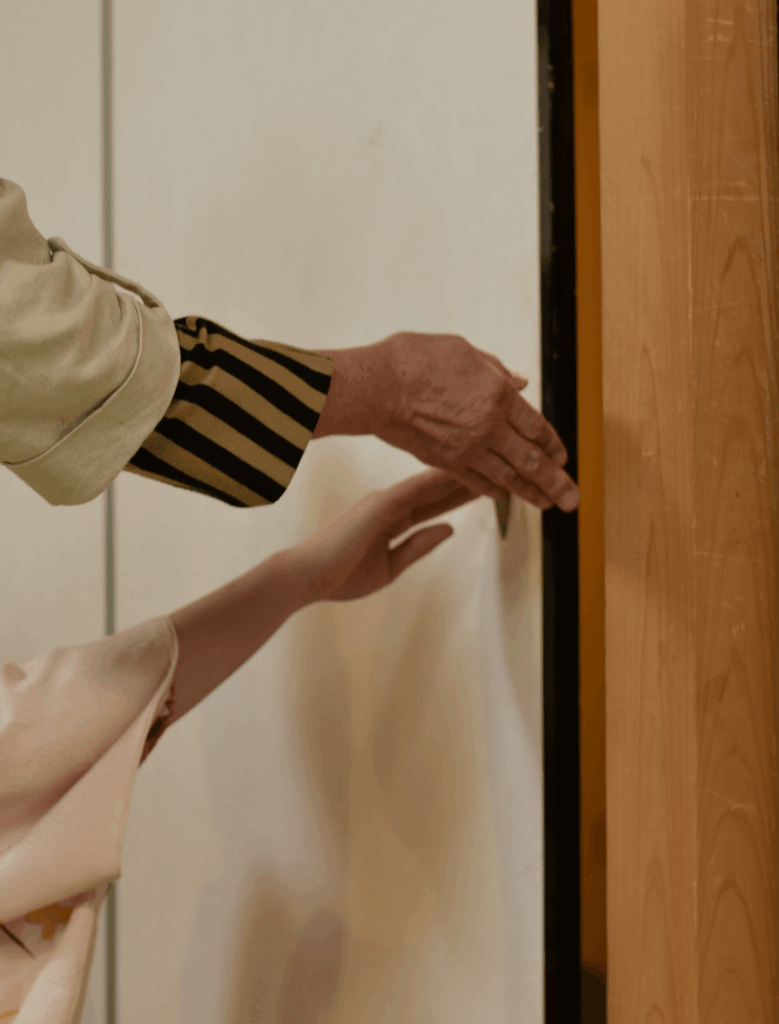
Our instructor has guided leading figures – from proprietresses of renowned ryōtei (Japanese-style hotels) to top executives – in the art of hospitality and refined etiquette.
As a bridge between tradition and the modern world, she supports leaders both in Japan and abroad with thoughtful, personalized guidance.

Instructor
Our instructor has guided leading figures – from proprietresses of renowned ryōtei (Japanese-style hotels) to top executives – in the art of hospitality and refined etiquette.
As a bridge between tradition and the modern world, she supports leaders both in Japan and abroad with thoughtful, personalized guidance.
Fundamental Etiquette Course
Proper Greetings
Learn the essentials of refined greetings, including graceful bowing and creating a positive first impression.
Japanese Cultural Refinement
Deepen your understanding of seasonal customs and traditional practices.
Viewing the Tokonoma
(Japanese-style alcove)
The mindset and manners required when appreciating a tokonoma alcove, and how to enjoy the beauty of a traditional, Japanese interior.
Etiquette in a Washitsu
(Japanese-style Room)
How to formally enter a genkan (Japanese-style entranceway) or washitsu, proper posture and movements, and the traditional use of zabuton cushions.
All sessions are by reservation only and conducted in small groups.
In the elegant setting of an ochaya (exclusive traditional Japanese establishments where patrons are entertained by maiko and geisha) in Gion, spend a moment cultivating genuine dignity and inner grace.
We offer a monthly etiquette course in Gion, Kyoto, each class lasting a little over two hours. For inquiries, please feel free to contact us. Applications are also accepted via Instagram.
Participant Voices
"You can learn manners on YouTube, but you cannot correct the subtle movements of your unconscious habits without actual practice.
As adults, people rarely correct our mistakes. That is why I was truly grateful that I was able to take this course. "
Wife of a business owner (Female, in her 30s)
"When I was an employee, I never paid much attention to etiquette. But after becoming a business owner myself, I began interacting with other executives and high-net-worth clients, and my interest grew.
After my first experience, I was astonished by how excellent the class was. During my second visit, I ended up purchasing a six-month package. "
Real estate company owner (Male, in his 40s)
"I once learned that traditional arts ending with the character ‘dō’ (道), such as tea ceremony, flower arranging, and martial arts, all originate from Shinto. Knowing that the instructor holds a priestly qualification, I had always been intrigued.
This course also resonated with what I learned years ago in the sencha-style tea variant of the tea ceremony.
Learning practical skills, such as greetings and gift-giving etiquette, was incredibly valuable. "
Gym owner (Male, in his 40s)
"When I was younger, I was once told I lacked grace. It stayed in my mind for years.
After having a child, I felt that if I didn’t know proper manners, I couldn’t pass them on to my children. I was nervous at first, but the warm atmosphere put me at ease.
The instructor pointed out things I had never noticed about myself – and it became a turning point in my life. "
Model (Female, in her 30s)

Participant Voices
"You can learn manners on YouTube, but you cannot correct the subtle movements of your unconscious habits without actual practice.
As adults, people rarely correct our mistakes. That is why I was truly grateful that I was able to take this course. "
Wife of a business owner (Female, in her 30s)
"When I was an employee, I never paid much attention to etiquette. But after becoming a business owner myself, I began interacting with other executives and high-net-worth clients, and my interest grew.
After my first experience, I was astonished by how excellent the class was. During my second visit, I ended up purchasing a six-month package. "
Real estate company owner (Male, in his 40s)
"I once learned that traditional arts ending with the character ‘dō’ (道), such as tea ceremony, flower arranging, and martial arts, all originate from Shinto. Knowing that the instructor holds a priestly qualification, I had always been intrigued.
This course also resonated with what I learned years ago in the sencha-style tea variant of the tea ceremony.
Learning practical skills, such as greetings and gift-giving etiquette, was incredibly valuable. "
Gym owner (Male, in his 40s)
"When I was younger, I was once told I lacked grace. It stayed in my mind for years.
After having a child, I felt that if I didn’t know proper manners, I couldn’t pass them on to my children. I was nervous at first, but the warm atmosphere put me at ease.
The instructor pointed out things I had never noticed about myself – and it became a turning point in my life. "
Model (Female, in her 30s)
Frequently Asked Questions

Frequently Asked Questions
Is there a dress code for the etiquette class?
We recommend attire that reflects grace and refinement, such as suits, dresses, or skirts.
Overly casual clothing is discouraged; however, formal wear is not required.
Can I take the course even if I don't speak Japanese?
Yes, it is possible.
But please note that the instructor is not able to explain in English, so if you need an interpreter, please bring one with you.
An English textbook is available for the basic course.
Through this experience in Kyoto, you will be able to experience the essence of Japanese culture.
Do you offer corporate training or group programs?
We design programs tailored to your purpose – executive training, staff hospitality training, or customer service development. Both Kyoto-based sessions and on-site instruction at your location are available. ,
Example content:
・Training for executives at a traditional Kyoto restaurant
・Guidance on etiquette and behavior for those opening a Japanese-style dining establishment
・Hospitality education for employees
Please feel free to inquire.
Where are the classes held?
Sessions take place in special locations normally closed to the public – such as tea houses in Kyoto’s Gion district or former private rooms where retired geiko once taught traditional kouta-style singing.
All classes are small-group and reservation-only, ensuring a serene environment in which to experience authentic etiquette.
How do I apply, and what are the payment methods?
Please contact us via email to apply. Payment is requested in advance via bank transfer.
Etiquette reflects the essence of one’s life.
Learn the art of hospitality and refined conduct in Kyoto’s Gion.

Notice
Blog
The article was not found.
Notice
Blog
The article was not found.